
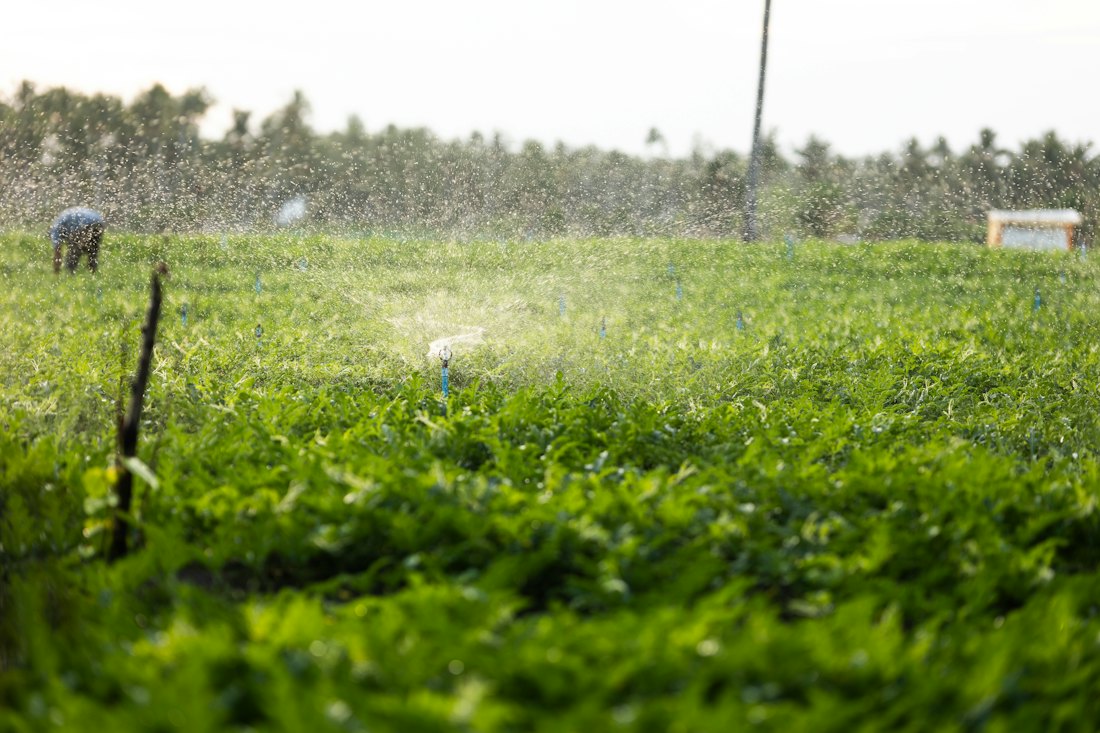
A farm is a large place to keep an eye on. The Internet of Things, or IoT, means placing small connected sensors where things matter and letting them report to your phone. It turns guesswork and long drives into information.
What can be monitored
- Soil and weather. Soil moisture and temperature probes show when and how much to irrigate. A local weather station records rainfall and wind on your land, not at the nearest town.
- Water. Tank level, flow and pump sensors warn you about a leak or a failed pump before a field or a herd goes without water.
- Livestock. GPS tags and virtual fences alert you when animals stray or are moved at an unusual hour.
- Storage. Temperature and door sensors in cold rooms and stores protect produce after harvest.
- Equipment. Trackers on tractors, pumps and implements show where they are and when they are running.
Built for remote land
Farm sensors are designed for places without mains power or strong mobile signal. They run for long periods on small batteries or solar panels, and use long-range wireless links to cover many kilometres from a single gateway.
Start small
You do not need to connect the whole farm at once. Pick the one thing that costs you most when it goes wrong, whether that is water, theft or spoilage, and monitor that first. The savings from the first project usually pay for the next.